

You may dream of a confident, dazzling smile for Valentine’s Day, but your misaligned teeth keep holding you back. You can bid your mismatched teeth goodbye, as two treatment approaches are available: jaw surgery vs. braces. But which one is right for you?
Braces are a reliable choice, but so is orthognathic surgery. Using braces eliminates the need for surgery, and you can choose from numerous trendy types that offer comfort and good results.
On the other hand, braces cannot correct complicated orthodontic problems, which is why it is equally essential to consider orthognathic surgery. So, read on to make an informed decision about the best orthodontic treatment for a perfect smile.
Understanding Orthognathic Surgery
Orthognathic or surgical orthodontics is a unique treatment approach confronting complex jaw discrepancies that traditional orthodontic procedures cannot correct. It is a transformative surgery that combines orthodontic treatment and surgical procedures to realign the jaws, enhance facial balance, and reposition the teeth.
Orthognathic surgery offers a complete solution for those with severe jaw misalignments. It enables them to achieve seamless oral function and exude a radiant, harmonious smile.
Why Do You Need Orthognathic Surgery?
The essence of corrective jaw surgery for misalignment is to help do the following:
- Enhance speech and swallowing problems due to mispositioned jawline.
- Resolve complex and painful bite issues to restore chewing comfort.
- Balance teeth to prevent unparalleled biting, teeth wear, and erosion to ensure a healthier smile.
- Restore balance to the facial profile by correcting issues including a protrusive lower jaw, retrusive upper jaw, or retrusive lower jaw.
- Eliminate sleep apnea symptoms to improve sleep quality and overall well-being.
What are the severe conditions that orthognathic jaw surgery addresses?
Corrective jaw surgery for misalignment can address complex conditions that affect the dental and facial features of a person, including the following:
Open Bite
An open bite is a type of bad bite or malocclusion where the lower and upper teeth regions overlap when the mouth is closed. It might occur at the back teeth, front teeth, or both. Many factors may lead to open bite, including thumb sucking, genetic inheritance, jaw growth abnormality, and tongue thrusting. In mild cases, braces can fix open bites, but surgery is done to correct the misaligned jaw if there are underlying problems with the facial profile.
Protruding Jaw
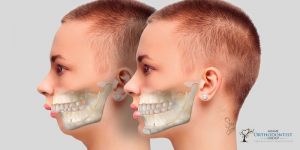
A protruding jaw is where the lower jaw extends beyond the upper jaw, causing a prominently protruding jaw and teeth misalignment. This condition can occur due to abnormal jaw growth, genetic inheritance, temporomandibular joint (TMJ) disorder, and other orthodontic issues.
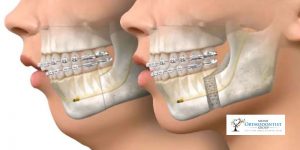
With orthognathic surgery, the bone in the back of the jaw is separated from the one in the front region and adjusted so that the lower jaw-bearing tooth can be shifted to the back for proper alignment.
Receding Lower Jaw
A receding lower jaw, or a retrognathic mandible, is a severe orthodontic condition in which the lower jaw placement is unparalleled in the upper jaw. This causes misaligned teeth and weakens the chin due to a lower definition of the facial profile. During surgery, the bone in the lower region is separated and adjusted. The chin and tooth-bearing region of the lower jaw are also realigned forward.
Understanding Orthodontic Treatment With Braces
Orthodontic treatments specialize in correcting both facial and dental irregularities. Dental care involves using dental appliances like braces to correct bad bites.
Wearing braces for bite correction helps address mild and moderate dental issues, including misaligned bites, tooth gaps, and overcrowded teeth. It also improves chewing efficiency, bite functions, and speech clarity. The treatment usually involves orthodontic dental appliances, including traditional braces, Invisalign, and retainers.
Why Choose Braces?
Getting braces is essential for achieving a confident smile with orthodontics. It has many benefits, offering you a healthy smile and aesthetic confidence. Here is why you might like to consider braces:
Correct Bite Difficulties:
Bad bites include crossbite, underbite, and crossover bite, and this dental condition can make you feel bad, especially on Valentine’s Day when speaking to people you love, eating your favorite meal, or laughing at a joke. However, dental orthodontic appliances like traditional braces can correct them. The braces help by realigning the jaws and teeth, improving facial appearance and oral health.
Braces Address Misalignment:
Braces correct misaligned teeth and enable a straighter smile by gradually moving the teeth to a proper position. You can wear a confident Valentine’s smile if you correct your misaligned teeth with braces.
Braces Offer Lasting Results After Treatment:
Braces are more effective in the long term than some orthodontic remedies. Patients often enjoy better oral health with their properly aligned teeth for a lifetime.
Braces Make Oral Health Better:
People with bad bites and misaligned teeth may find it challenging to clean their teeth properly. However, after treatment with braces, the teeth are straighter, allowing easy access to teeth cleaning, which prevents tooth decay and gum disease.
Treatment With Braces Enhances Self-Esteem:
Dental problems can cause a lack of confidence. But getting braces to correct this problem boosts self-esteem. It allows individuals to socialize without fear of being conscious about their smile.
What Are the Types of Braces You Can Try?
Orthodontic braces are designed differently, each offering a unique function and benefits.
Traditional Braces
Traditional braces stand out the most. They are attached to teeth and consist of metal brackets, archwires, and adjustable bands. As treatment progresses, the teeth shift gradually into a more appropriate position.
Clear Aligners
Clear aligners are one of the best orthodontic treatments for a perfect smile; they are suitable dental appliances for discreet and comfortable treatment. Due to their transparent appearance, clear aligners are removable and nearly invisible. They are custom-made to fit a specific patient’s needs. They gradually move teeth into alignment, often faster than traditional braces.
Ceramic Braces
Another type of braces for bite correction is ceramic braces. These are sophisticated versions of traditional braces, as they appear more attractive and do not require metals. The brackets are less prominent because they are made with a natural color to blend with the teeth. Like traditional braces, they use archwires to shift teeth into a better position gradually.
Conclusion
Achieving a confident smile with orthodontics is possible. But you need to consider your options carefully. You might not need orthognathic surgery if you have mild dental problems. Braces correct minor orthodontic issues, while orthognathic surgery corrects more complex cases, especially those involving jaw misalignment. However, you can consult your orthodontist for guidance on which treatment would work best for you. Choosing between jaw surgery vs. braces aims to get a healthy and beautiful smile that will make your Valentine’s Day memorable.
Ready to Transform Your Smile?

Miami Orthodontist Group
Serving Miami & Doral, FL — Two Convenient Locations
Dr. Pedro J. Alquizar and his warm, bilingual team are passionate about creating beautiful, healthy smiles for patients of all ages. We offer Invisalign, braces, and advanced orthodontic treatments using the latest technology — all in a welcoming, upscale environment. Schedule your free consultation today!
Request Your Free Consult
Miami Orthodontist Group
Your Miami Smile Specialists
Invisalign & Braces for children, teens & adults in Miami & Doral, FL. Two convenient locations — request your free consultation today!
Request Free Consult