
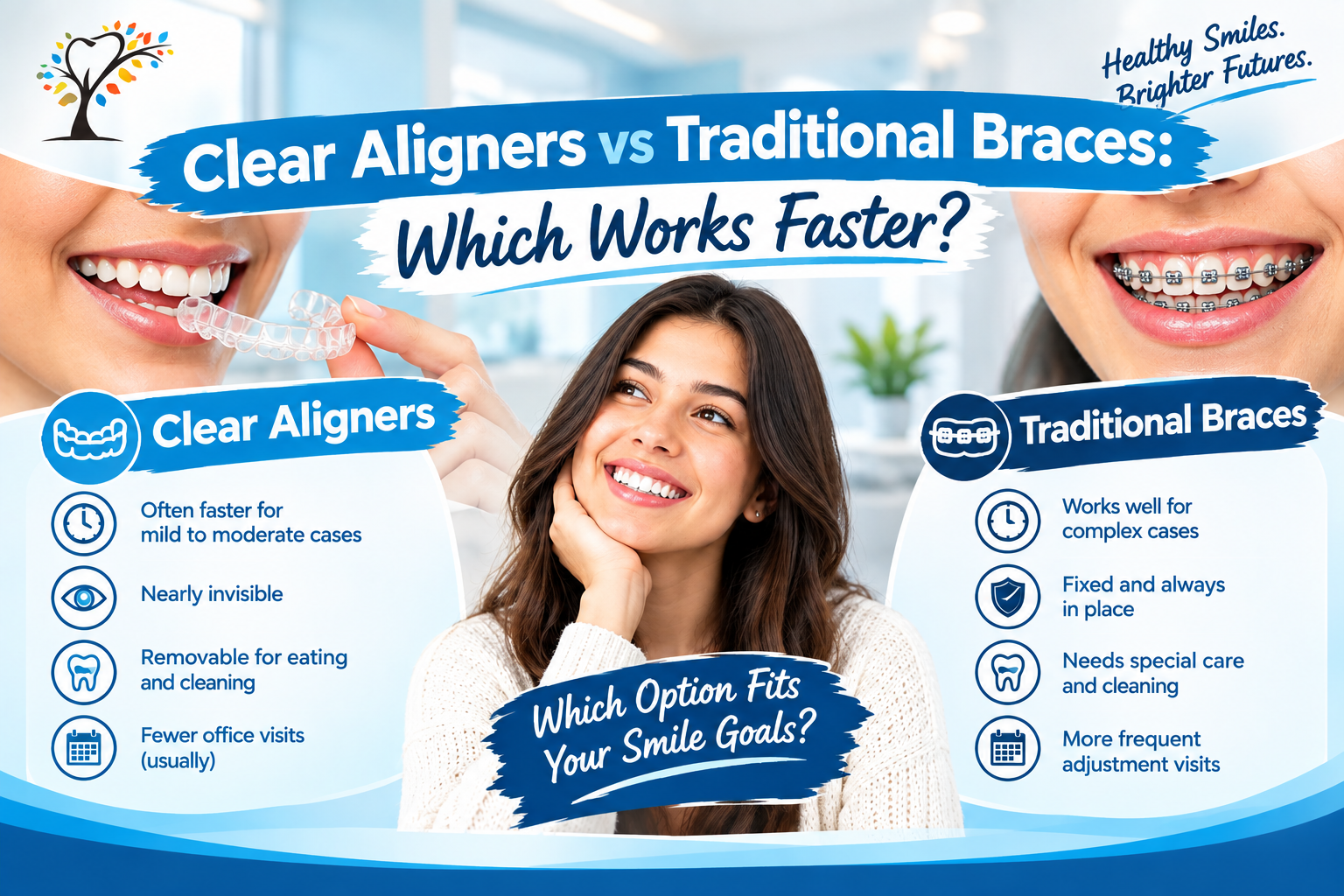
In the debate over Clear Aligners vs Traditional Braces, clear aligners usually work faster for mild-to-moderate alignment issues. Clear aligners take about 6 to 18 months. Traditional braces work faster for severe or complex cases. They can take 18 to 36 months to complete the procedure.
So when it comes to Metal Braces vs Invisalign, there’s no single universal winner. This guide breaks down exactly which Orthodontic Treatment Options work faster for your case. It also covers factors that actually determine your personal timeline.
Which Option Typically Works Faster?
- Clear Aligners: On average, clear aligners take less time. With steady, targeted pressure, they can move multiple teeth at once. But this speed advantage is only helpful for mild-to-moderate cases where less dramatic movement is required.
- Traditional Metal Braces: On the other hand, traditional braces are suitable for a variety of dental problems. They are helpful where complex movements and longer treatment are needed. So, neither option is faster; it only depends on what your teeth need.
The American Association of Orthodontists reports that around 4 million people in the USA wear some form of orthodontic appliance. It includes traditional braces and clear aligner systems such as Invisalign, ClearCorrect, and others.
How Fast Do Clear Aligners Work for Mild-to-Moderate Cases?
Clear aligners often finish mild-to-moderate cases in 6 to 15 months. This is because they apply targeted, removable pressure to shift groups of teeth simultaneously rather than one at a time.
So, clear aligners are a suitable teeth-straightening option for patients facing minor gaps, slight crowding, or cosmetic spacing issues. They do not need significant jaw or bite correction.
Products such as Invisalign and other removable orthodontic appliances have become popular because of their fast procedures. Their invisible appearance makes them appealing to adults and image-conscious teens alike.
Why Do Traditional Braces Work Faster for Complex Cases?
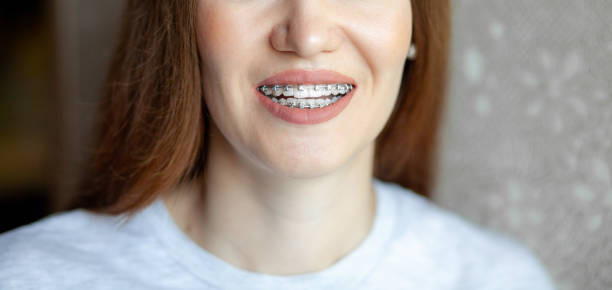
Traditional braces work faster for major rotations, severe crowding, and large vertical movements. In such cases, fixed metal wires apply constant, 24/7 heavy force that plastic trays simply can’t match.
However, patients cannot remove such braces; they ensure consistent wear time without relying on daily discipline. It is especially important for deeper bite corrections and severe jaw misalignments. Due to the sustained force, orthodontists recommend traditional or ceramic braces for underbites, crossbites, and overbites.
How Do Aligners and Braces Compare Side by Side?
After a comparison, you can better understand why the quicker way to straighten your teeth depends on your specific needs. It helps you understand why the fastest way is not the best option for you.
Case Type | Clear Aligners | Traditional Braces |
| Mild to Moderate | 6 – 15 months (often faster) | 18 – 24 months |
| Complex / Severe | Not ideal; limited effectiveness | 18 – 36 months (often faster overall) |
| Daily Wear Requirement | 20 – 22 hours, removable | 24/7, fixed in place |
Both options offer speed advantages depending on your case complexity. That is why an accurate diagnosis matters more than picking a treatment based on reputation alone. Advanced Dental Technology, including 3D digital scanning, helps orthodontists predict treatment timelines more accurately. This gives patients a clearer idea of what to expect before treatment even begins.
What Factors Affect Your Treatment Timeline?
Several factors can affect your treatment timeline beyond the type you choose. Braces Treatment Duration depends on how much correction you need.
Severity of Misalignment
The further your teeth need to shift to reach the desired final result, the longer your treatment will take. It is regardless of whether you choose aligners or braces.
Bite Issues
Significant bite misalignment requires longer treatment to correct properly since these deeper structural issues take more time to resolve safely.
Patient Age
Children and teens typically have shorter treatment periods than adults. This is because their teeth aren’t as set in place and their jaws remain more malleable during growth.
Consistency With Aligner Wear
Patient compliance matters enormously for aligners specifically. Since forgetting to wear them for the full 20 to 22 hours a day delays results. It can make treatment longer than braces overall.
Frequently Asked Questions
Which one is faster, aligners or braces?
Usually, aligners take less time and are suitable for mild to moderate issues. Traditional braces take longer than aligners, but they are the only solution for complex dental corrections.
Are traditional braces better than aligners?
Neither is universally better. The right choice depends entirely on the complexity of your dental alignment and your personal lifestyle and preferences.
Do refinements slow down aligner treatment?
Yes, aligners sometimes require additional sets of refinement trays near the end of treatment. So, it can add a few months to the overall timeline.
Why do braces work faster for severe cases?
Braces apply constant, fixed pressure 24/7 and can’t be removed, giving them an advantage over removable aligners for major rotations and severe crowding.
Does age affect how fast treatment works?
Yes, children and teens usually finish treatment faster than adults. Because their jaws are still growing and their teeth aren’t as fully set in place.
How many hours a day do aligners need to be worn?
For good results, you should wear aligners 20 to 22 hours a day. Skipping wear time is one of the most common reasons treatment takes longer than expected.
Can I switch from aligners to braces if my case is more complex than expected?
Yes, your orthodontist can recommend switching treatment types if your case requires more force or precision than aligners can provide.
Final Thoughts
Choosing between clear aligners and traditional braces really comes down to your specific case, not a universal speed advantage for either option. Mild-to-moderate cases often progress faster with aligners. Complex corrections still favor the steady mechanics of Discreet Teeth Alignment Solutions such as ceramic or traditional braces.
So, the fastest path to a straighter smile is the one that’s actually recommended for your specific bite and alignment needs. A faster option may not yield the desired results, depending on your specific case.
Miami Orthodontist is ready to evaluate your specific case and recommend the treatment option that will genuinely work fastest for your smile. Schedule a consultation today and get a personalized timeline for your orthodontic journey.
Ready to Transform Your Smile?

Miami Orthodontist Group
Serving Miami & Doral, FL — Two Convenient Locations
Dr. Pedro J. Alquizar and his warm, bilingual team are passionate about creating beautiful, healthy smiles for patients of all ages. We offer Invisalign, braces, and advanced orthodontic treatments using the latest technology — all in a welcoming, upscale environment. Schedule your free consultation today!
Request Your Free Consult
Miami Orthodontist Group
Your Miami Smile Specialists
Invisalign & Braces for children, teens & adults in Miami & Doral, FL. Two convenient locations — request your free consultation today!
Request Free Consult